Saturday, 24 April 2010

Spectrum Magazine 25th April 2010

Photo by John Trudgill

6.Creaking in the Sun

In the old days, when I was trying to climb hard all the time, we were always bouldering in Northumberland and trying to climb in Spain or in a Winter Sun destination. The hope was that when the cliffs of Scotland dried off, in the spring, we would come out of the winter in tune with the rock and moving well.

These days I am not chasing the hard grade train anymore. My sporting activity is more in tune with the seasons. Climbing in the spring, mountain biking on wet days, Road biking some days where there is time pressure, mountaineering on long routes in the mid to late summer, Rock Climbing in the Autumn cool, drinking and eating whilst waiting for the ice, ice climbing and snowboarding in the cold winter and ski-touring in the warm winter days. It has its own rhythm dictated by the turning of the earth. We maybe the last couple of generations able to enjoy this cycle. The treat of warmer winters and wetter summers may mean that soon we will have to become kayakers.

But today the sun is working its magic, the leaves are still not on the trees and the earth still smells dormant. Life just below the surface is still wary of getting zapped by a late frost. The venue for today’s climb is Weem forest near Aberfeldy. There is a small group of cliffs here, some steep, some slabby. It’s a great early and late season area. With routes of many standards and reasonable quality, it’s well worth a visit.

But firstly I need to find all of the bits, buried in the Garage. Sport Climbing, where you free climb on the rock using the rock features for you hands and feet and a rope clipped into pre-placed bolts in the rock, is the goal today. Apart from the obvious rope and gear, I need to find some extras that can help the day go smoothly; zinc tape to protect tendons and finger joints, superglue to stick down torn skin flaps, and nail clippers to trim the digits so the blackboard scrape on the rock is avoided.

As the days are short, there is a bit of hurry up on once the decision has been made to go. As the motorway rudely runs out at Perth, it’s time to suffer the pain of the A9, but today its quiet. Even the traditional pre climb café stop is sacrificed, as crag hunger is stronger. A short walk up to the crag feels longer; the memories of last spring conveniently compressed. When we reach the crag it seems very small and some of the lines are seeping with water, the ground water pressure still out of balance for the climber. There are many familiar routines, laying out the gear so it does not roll down the hill; apples especially are prone to trying to escape their snack fate at the cliffs. I really feel at home at the cliff, the smells, the noise of the gear, the feel of the rope, it’s a process and routine which is a subconscious precursor to the challenge ahead.

We are essentially horizontal world dwellers, we live in a world of flatness, 99% of our human existence is spent in shopping centre’s, offices, concrete, carpet and tiles. It’s a cruel fate, a modern life devoid of variation. So stepping from the flat to the vertical is even, after 35 years of climbing is a wonderful step into the unusual. Before I leave the familiar, and the take the step onto the extraordinary, I check my knot, a simple set of twists in a 10mm thick piece of nylon, not much really between fun and disaster, safety and not. I put climbers chalk on my hands to dry the sweat and to aid the grip. I rub them together to get rid of the excess; they sound dry and feel cool. A cloud of white dust slowly drifts away from my hands. I check my knot again, an early season tick, and I step onto the rock. The rubber on the shoes bites into the gneiss crystals, I step into the 3rd dimension.

Sunday, 18 April 2010

Spectrum Magazine 17th April 2010


Function over Fashion

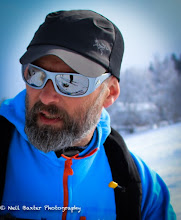
Winter sports in Scotland can be a revelation. The hills in full winter garb, under a blue sky can rival any landscape I have seen. In bad weather, even the simplest of winter days can be an arctic test of endurance. I have long been a fan of the Cairngorms, their rugged beauty both majestic and intimidating. To the ill equipped, they are a place of tragic encounters. Today was a test day for an expedition to Kashmir. Neil Baxter, infamous Kayaker and recent on-screen torturer of Fred MacAulay and Dougie Vipond and I were heading off to the Himalayas to join a bunch of hardened big mountain ski-tourers. The scene was set for 3 weeks of digs about “slowboarders” and “gays on trays”, so in order to deflect as much of this verbage as possible, we thought we had better work though our gear and systems on a Scottish winter hill. It was a foul day with a pretty high wind. We parked in the Coire Ciste car park. The lifts were shut. We were promised a people free morning.

We opted to try short approach skis and to carry the snowboards. Just the simple act of putting on and lacing boots was a test of endurance. It was about -8 oC at the car park with a healthy 30-40 mile an hour wind, dropping the temperature to about -30oc. Our exposed hands felt the bite within just a few seconds of gear fumbling. Note to self: “buy Black Diamond ski touring gloves”.

With the wind blowing horizontal snow at our backs we took it in turns to break trail up into the Coire. As we zigzagged our way up it became obvious to me that even though Neil is a magician on the water, and had a good few years of Canadian snowboarding under his belt, this was altogether a new experience for him. Dressed in some trendy snowboard gear he quickly overheated and stripped off to thermals and micro fleece, which within minutes became encrusted in rime ice. He was walking too fast and sweating too much. Having learnt the hard way, I have long since dumped snowboard and ski clothing and opted for mountaineering kit, so I was pretty comfortable, apart from a cold ear and a freezing pinkie.

Soon the wind picked up again and our ridiculous snowboards began to act as unwanted sails on our backs. Layers of wind-slab began forming in patches on the hard snow underneath our test approach skis. The combination of being blown about like some snowboard weather vain and the snow breaking away under our feet meant it was physical, be we were having a ball, or at least I was, This is what I wanted to feel; alive, in a wild place, working out problems, feeling in control in difficult conditions. With visibility down to 50 meters we reached the top of the ski lifts just below the summit of Cairngorm. Neil had been making all the right noises, but as soon as we stopped to check the map, things changed. His skin looked in patches like white putty, and without a decent shell layer he chilled fast. 400m from the Ptarmigan restaurant we bagged it.

Making the transition from climbing to boarding, the wind threatened to blow our gloves away, rip our jackets from our hands and send our boards skidding off down the hill, Neil’s hands were stiff and cold. The ski/ride back to the car took ten minutes. It had taken over and hour and a half to climb to the high point. It was short day on the hill but we learnt a lot. I learnt to look at the big picture and make decisions not just based on how I felt; Neil that it was time to shop for some serious hill gear.

Tuesday, 13 April 2010

Spectrum Magazine April 11th, 2010


3.Skye was the limit

With any sport there is a period of learning, consolidating and performing. Chuck in a few more variables like a flexible, organic medium like ice, (and people), the learning never stops. The Skye ridge in full winter conditions is a site to behold. The jagged peaks of black basalt crisscrossed with snow gullies and ice runnels, is truly magnificent. I have always loved the concept of first ascents; it’s like creating a little piece of history; to be first, unique and unrepeatable.

We got up far to late, Dave and I, and struggled into Coire Lagan under heavy winter packs. It was perfect. Almost no winter routes in the Coire, and conditions were great. It was truly magnificent, rocky and completely iced up; a very rare occurrence. Standing underneath the Cioch, famous for the “Highlander” cliff fight scene I waited for a rather unfit partner to catch up. I scanned the cliff above for new route potential.

Dave eventually dumped his pack in the snow and asked me what the plan was. Not knowing much about the crag, I opted for a line of unclimbed ice that ran just right of the main buttress. I set off leading, the ice was only a couple of inches thick, so by the time the rope ran out at 50m, I had placed no protection. Wedged behind a boulder I brought Dave up, with each swing of his ice axe he looked shakier, as his fear and panic took over. At the belay he refused to take his turn at the front.

So the day paned out. Every crack I found was chocked with ice and protection sparse, and the climbing got harder and harder. With no concept of time I got stuck into a pitch of pure, hard mixed rock and ice climbing. I was now fully committed on a steep wall. I tried to place a metal piton and dropped it. Now in a position I could not retreat from, and at my limit, I clicked into another zone, calm and clear. The move appeared. Pulling onto a ledge in the sun I sat down shattered. Using all my strength, Dave now had to be hauled up the wall. He flopped onto the ledge beside me. Above us, a beautiful crack lay just out of reach. Even though I tried 10 or so times I could not make the next moves. We were 50 feet from the end of the route and I was spent. Suddenly I noticed the sun, well the last rays of the sun. We were buggered. 500 feet off the Coire floor on big cliff with limited gear, shattered, with a freaked out partner.

Dave gave up and started gibbering. The stars came out, and the head torch went on. I did not want to spend all night out, so I pushed, lowered and cajoled Dave down the cliff in the dark. I lowered him down taking the weight off the gear to stop it puling out and sending us to our deaths. Then gingerly I down climbed. Half using the rope for support, I inched down the rock. Lights appeared in the corrie basin below. It was 10pm. Then they disappeared.

I climbed down the first ice pitch; every time I swung my axe I could see sparks under the ice where my crampons and axes punched though to the rock. The mountains were majesty; starlit and covered in snow, the moonlight reflected off the sea. What an amazing country, place and experience. We got back to the hut on Sunday morning 1am. On Monday morning the papers read, “ two experienced climbers failed to return in daylight prompting the Mountain Rescue to go on alert, ” and I went back to school. I was 16.

Sunday, 4 April 2010

Spectrum Magazine 4th April 2010


Turning the wheels

In Scotland we are lucky, yep the weather can be a bit wet, the wind a bit strong and the snow and midges frustrating. However we have mountain biking. We have the best cross-country mountain biking in the world. It’s a fact that France and Australia have the biggest down hill trails, and the USA has Moab and the Colorado trails but for sheer quality and design we have the best.

The centrepiece of these developments has to be Glen Tress, just south of Edinburgh. It is arguably the most successful mountain bike “resort” in the UK. I started riding seriously in 1996 after I bought my first bike with suspension in Canada during a filming trip with Chris Bonington. This was the start of a new obsession. The nice thing about biking in Scotland especially when time is at a premium (Kids, Job, etc) is that you can get the fix of exercise and adrenaline in a relatively short space of time. I am not sure how many times I have ridden the “red route” in Glen Tress but I have a mental picture of every tree root, every rock and every corner. Knowing the line so well allows it to become a friend for an hour and a bit.

Travelling in a favourite place regularly allows me to gage every mood, fibre and rhythm of my system. By the time I have reached the first car park, I know if I am bike fit. By the time I have finished the first descent I can gage if my riding will flow and be smooth or if I am tense and tentative. Climbing to the top of the route, riding up hill hair-pins at relative speed will either be a lung busting painful push or a power push. Oddly enough in the very dry, the riding is often sketchy, the loose gravel breaks out of the surface causing a hopefully predicable speed drift on the corners. In the full rain it can be grippy too, the oily sheen found on humid days cleansed from the rocks. Dropping into the descent, is a decision of commitment. Am I going to blast this? Go fast and try and rail every corner or drift and enjoy the breeze.

Like many things that are familiar, it has the ability to transcend into a metaphysical experience, focus and concentration merge into performance. In fast action, time seems to slow a little, awareness of every tree, pebble, root becomes heightened, vision is clear and distant. Here you can be riding very close to the limit, but if you are in the “zone” the flow is addictive. It brings you to the moment; harmony of action, body and mind, and for brief moments meditative. Then there are moments where there is a surprise. A rock in the trail, a new exposed tree route, the rouge thought, penetrating the mind. They come at you quickly, precipitating immediate and instinctive action. At their worst, its like an on coming car crash, they shoot a spasm of painful energy from your hands in to your shoulders, precipitating action or complete control. But I am simply riding a bike, on a trail, in a forest, one that thousands of others have done. For me, Glen Tress is all of these things, humiliating, exciting, testing and wonderful. Surly the essence of an Adventure sport is all of these things, mixing skill, excitement and a risk in a great place. Count your self-lucky that you live close by.

Saturday, 27 March 2010

Spectrum Magazine 28th Mar. 2010


Slowly opening eyes.

It is almost 35 years ago to the weekend that I stood in the cold early morning light in the Golf Course car park at the foot of Ben Nevis, with an ill-fitting rucksack on my back and a pair of bendy hill walking boots on my feet. To say I was scarred was over stating it, but I was nervous. After all, this was my first ever winter climbing experience and it was on the “big bad Ben”. My climbing partner, Ian Dally was 18 years older then me; a mighty veteran of expeditions to the Alps and the Artic peaks off Baffin Island in Canada, so I was in good hands. Why he thought that climbing with a gangly school boy in a pair of cut off jumbo cord breeches on one of the biggest walls in the country was a good idea, I will never know, but we set off up the track, with the morning frost crunching under our feet. Every breath and footstep took us closer to the biggest ice festooned cliffs I had ever seen. Icicles and gullies drop from the Summit observatory plunging towards the famous climbers hut, which lies under the North Face of the Ben. The names of these climbs; Point Five, Mega Route X, Gully, Echo Wall are legendary to climbers, mapping out a history of generations of climbers who, for over a hundred years, have dared to test themselves in this magnificent arena.

As we walked under the dark rock and ice walls, I could feel their weight baring down on my shoulders but any thoughts of actually climbing on these walls, were soon lost in the processes; simply putting one foot in front of the other.

We stopped at the hut and were handed a cup of hot tea from one of Ian’s friends who was lucky enough to have a place for the weekend. I stepped into the hut, its dark smoky walls echoed with the spirits of Patey, and Haston, dead legends whose deeds and words filled my young head. To the mountaineer, especially the ice climber, Ben Nevis is truly a giant, which to this day still offers unclimbed challenges to set the mind wondering and the palms sweating. We headed out from the hut. Like a puppy, I tried to stay as close as I could to Ian’s heels, stepping in his prints, matching his slow steady and relentless pace.

It took at least another hour to reach our objective, “Bob Run” a Grade II/III ice climb, one of the shortest routes on the mountain but with the longest approach on the hill. Ian dug a ledge into the snow and we put on our crampons. He then cut a T-slot into which my brand new ice axe was battered, and tied it off with a sling. Looking back, this would never have held a leader fall, but this was more to make me feel comfortable and stop me tripping over my crampons and pulling him off the route. I flicked the rope over my back and proceeded to waist belay Ian as he tip-toed up the ice above me. That day was a make or break for me. It was long, hard, and I had no clue what I was doing, but at the end of that day, sitting in the West End Hotel with an underage pint in my hand I was hooked. I cannot thank Ian enough for having the patience to guide me into a life in the mountains. That day I learnt to step-cut in ice, abseil from a snow bollard, to walk at “guides” pace, and so much more. Climbing and travelling in the Scottish Mountains has been one of the greatest gifts of my life.

Saturday, 20 March 2010

Scotland on Sunday Column

Welcome to Duncan McCallum's blog which will contain my weekly column for Scotland on Sundays Spectrum Magazine. The first column appears on Sunday the 28th of March. Additionally I will post a number of articles and photographs I have previously written for Scottish and UK National newspapers.

Skinning up in Lebanon -First Published 2006 Scotland on Sunday


Skinning up in Lebanon. By Duncan McCallum

The quiet scheduled flight from Geneva had dulled our senses, but emerging into the damp and cold Beirut evening, we were soon assaulted by the mad rush of apparently uncontrolled Beirut homebound traffic. This titanic rush-hour struggle of wits and nerve was compounded by the complete lack of traffic lights, rights of way rules, street lighting and etiquette. The winners drove with no fear for mortality or material damage. Their cars bear witness to many years of struggle on the street of Beirut.

Thus the pecking order on the roads of Lebanon is established. There are those with no fear, protected by the divine, inshallah, and the menacing ones with blacked out windows. Encountering either could lead to the road of eternal peace.

For those over 30 years of age, Lebanon and Beirut in particular are potent symbols of the ideological struggles between the liberal rich Christian west and the (perception of) embattled Islamic Middle East.

The resonance of these cataclysmic struggles that once ripped out the heart of the formerly beautiful east Mediterranean playground of Beirut now spiral out of control through the rest of the region, leaving Lebanon to a growing number of independently minded travellers attracted by the undeniable appeal of Lebanon.

The majority of the tourism confines itself to the undeniably modern and cosmopolitan centre of Beirut and world heritage sites such as the temples of Baalbek.

So to be invited to join of 10 of the worlds best telemark skiers and mountain guides to ski-tour in the Lebanese highlands, was a welcome chance to travel well off the “Rough Guide” path.

So it was; in early February when the European ski resorts have been struggling for a few meagre centimetres of snow the mountains of Lebanon were groaning under 4 meters of fresh snow.

The road out of the city to the countries premier ski resort, Faraya, is as steep as it is nerve racking, climbing from sea level to 1900m in less than 40km through the suburbs of Beirut. It is obvious that serious money is being made here. Modern SUV’s power up the snow lined road beside us to weekend mountain chalets and second-houses that splatter the hillside.

We arrive in Faraya to be heralded into a “Carlos’s” mountain bunkhouse whose restaurant specialises in the incongruous mountain specialities of Raclet and Fondue. The whole affair resembles a 70’s European mountain town.

The next morning events are conspiring against us, every road in the hinterland is blocked, telephone lines are out and the old VW transporter van which is supposed to transport us to the start of the trek is under 6 feet of fresh snow and going no where.

Time to kick back and go with the flow. This is hardly a hardship. After a 20 min walk up through the “resort” village we arrive at the base of the ski lift system. Acres of lift accessed untracked knee deep powder await us. Faraya, the biggest resort in the country is small by European standards and the lift system, although it boasts new high-speed triple chairs. Comparing it to an alpine mountain is a non-starter but the area stands up nicely to North American resorts such as Keystone or A-basin. The snow today is world class and we have the run of the hill, running “freshies” under the lifts until beer time arrives.

Accompanied by Chateau Kasara 2003, dinner is wonderful Lebanese fair of Tubule, Humus, Garlic paste, olives, skewered lamb and chicken pieces and hand cut french-fries and round bread nappies.

With the perfectly good lifts heading up the mountain to the south, our caravan heads north towards the cave of Magharet Afqua. The Romans believed that this was the place were the legend of Aphrodite and Adonis took place. Wounded, Adonis went to this cave to die, and ever since the river runs blood red every spring (a red clay spring melt).

After a 3-1/2 hour climb we reach the summit ridge on which we lunch. A short 3km ski east leads to our target. No one has ever skied this slope below us and it is laden with fresh deep inviting powder. We cannot see over our chosen slope but the hill to our left has cliff bands all over the place.

Dropping out of site into a 50 degree couloir, Sarah Ferguson (the skiing one) drops out of sight, I follow. The slope is really steep, deep and totally committing, wow! The rush of excitement is tangible, steep deep and virgin snow. Powder washes over my head but I am aware that this is a serious place, moving quickly down the slope the couloir narrows. Behind me I feel I have released a small avalanche, it threatens to force me down farther than I want to go!

Sarah appears below me through the powder veil I am kicking up. It is obvious that 25m below her the slope disappears into a white void. I stop. She has stopped just above a blind roll-off, a small wrist sized tree she hugs provides an impression of protection.

We make our way out of this complex cliff band area; looking back it is clear we had stopped just above a 60foot cliff.

A quick mobile call sees us picked up by mini bus at the mouth of the Afqua cave. Our driver a Messianic Christian, is cheerful enough until a bout of motion sickness welling up in the bus forces us to stop in a village half way to the mountain resort of Laqlouq. The now uncomfortable driver dutifully stops and we all pile out of the bus to breath.

We soon discover he is not as worried about the vomit at all; he is however concerned at stopping in a village he identifies as a Hezbollah strong hold.

Our journey resumes incident free, our driver crosses himself as we leave the valley and pass a small Madonna shrine at the side of the road. Not far below the surface, old scars still exist.

Now we face a really big day, we are heading towards the legendary Cedars of Lebanon. These gracious trees once coved the Highlands of Lebanon as the Scots pine covered the Scottish Highlands. The Cedars were exploited over the centuries; firstly by The Phoenicians as early as 1200bc, then buy the Romans. Only a few tiny stands still survive.

17km and 2000m of ascent into the day we are all pretty tired. We are at 2600m and facing a decision, push on until dark at 6.30 and see if we can reach the Cedars or hunker down on the summit for the night. We decide to push on. The skiers all bugger off down the 300m descent, but I have a problem. My bindings are frozen solid and my short skis are fused to my snowboard boots.

I am left alone on the summit with only a short time before sunset. Desperate situations require radical solutions. There was only one thing for it. I had to urinate on the straps to warm them up to open them. Piss on one, stop, and hold on while you open the binding, then hopefully with enough bladder control do the same again. With relief I clipped into the board and shot off down the hill following the ski troop.

However at the end of every down there is an up. The skiers are now skinning up the other side of the valley, which involves me getting into the climbing skis again. The bindings now instantly freeze again (it was minus 10 degrees C). Thank god for good bladder control.

Night descends and we are still moving on the snow, waves of Scottish winter climbing nostalgia wash over me as we all hunker down into a star light rhythm of movement. At 7.30pm we stop.

A snow wind scoop provides the nighttime accommodation at 2500m over looking the Cedars. I like the challenge of snow-holing. It is a mixture of boyhood adventure, survival techniques and simple construction. Whilst some dug, others cooked.

The funny thing about a bivouac, is that it is always most comfortable just before you need to get up. You struggle all night to get comfortable dry and warm and just as you have to get up you find the best warmest position of the night.

The Cedars ski-bowl is huge, you could fit the legendary back bowels of Vail Colorado into this vast area ten times. 900m (3000ft) of unskied hill spreads out below us. We stand above lines of immense size and quality.

In the Ceders “La Cabana” hotel, Château Musar, one of the countries finest wines, is quaffed in great quantities by the team. The same red soil that produces the great Lebanese wines, just over the range from here used to produce tones of “Red Leb” Hashish.

The next day we ski directly into the main production area, the spiritual home of the Hezbollah, the Bekaah valley.

The mountains divide the country physically culturally and spiritually. Muslim and Christian communities do exists on both sides but whilst the western slopes seem somehow European, once the range is crossed you are defiantly into the Arab Middle East.

Our hosts arrive in a convoy of battered Toyota trucks to take us to the house they have given us for the night. We spend that night laughing, eating, sleeping under stashed 303 rifles and a tripod mounted machine gun. Travelling should be like this always. We were welcomed in with open arms and hearts; our hosts prepared beautiful food, cooked over charcoal open fires and all we offered was our company, laughter and appreciation.

Strapping our planks to our feet we climb to the highest point in Lebanon, Qurnat as Sawda, 10,128 ft. (3,087 m). It’s unimpressive, littered with shotgun cartridges and AK 47 and 9mm hand gun casings. It’s blowing a hooley. Backs to the chilling wind blowing from Damascus, we are blow north west towards Tripoli.

From the summit we ski 5km of perfect corn snow (coarse, granular snow) in the evening light. Building snow caves is like building sand castles; it is easy to get carried away. By the time I am finished, I have entrance steps, a veranda, side block walls, spindrift gutters and wind blocking sidewalls.

Sunrise looking towards Syria on the last mountain day is truly beautiful.

Travelling through the dusty city of Hermel yellow flags depict a raised arm holding an AK47. They adorn every telephone pole and streetlight. Black flags of mourning hang lifeless in the twilight. Giant pictures of the mullahs look down from every street corner.

In the evening air, haunting and beautiful calls to prayer blast out from trumpet speakers, each one competing with the other, for the heart and minds of the city

In Baalbek, the ancient seat of the Phoenician empire, and stronghold of the Romans, great ruined temples to Venus and the gods stand testament to the value that invading cultures have placed on Lebanon and its natural resources. These stone wonders are testament to human creativity, the worship of false gods, greed and power.

There are seeds of hope in Lebanon, people are struggling to create harmony and a society where people of differing beliefs can live, worship and live together. However outside influences are still trying to pull the people apart, however they should note the fate of the ancient builders. Like melting tracks in the snow, all great powers fade away eventually. What remains is the spirit of spring and rebirth, after a long lonely winter out in the cold.

Ó Duncan McCallum 16th March 2006 all rights reserved.